RHINOPLASTY (DAY CASE)

Rhinoplasty, commonly known as nose reshaping surgery, is a cosmetic and functional procedure designed to improve the size, shape, symmetry, or structure of the nose. A day case rhinoplasty allows patients to undergo surgery and return home the same day after recovery and monitoring. The procedure can enhance facial balance, refine nasal contours, and improve breathing issues related to structural concerns. At London Harley Street Clinics, our surgeons use advanced rhinoplasty techniques to deliver natural-looking results tailored to each patient’s facial anatomy.
WHO IS RHINOPLASTY (DAY CASE) FOR?

Rhinoplasty is suitable for individuals who:, Want to reshape or resize the nose, Have a nasal hump or uneven profile, Experience nasal asymmetry, Want refinement of the nasal tip, Have breathing difficulties caused by structural issues, Desire improved facial harmony and balance, Prefer same-day discharge after surgery

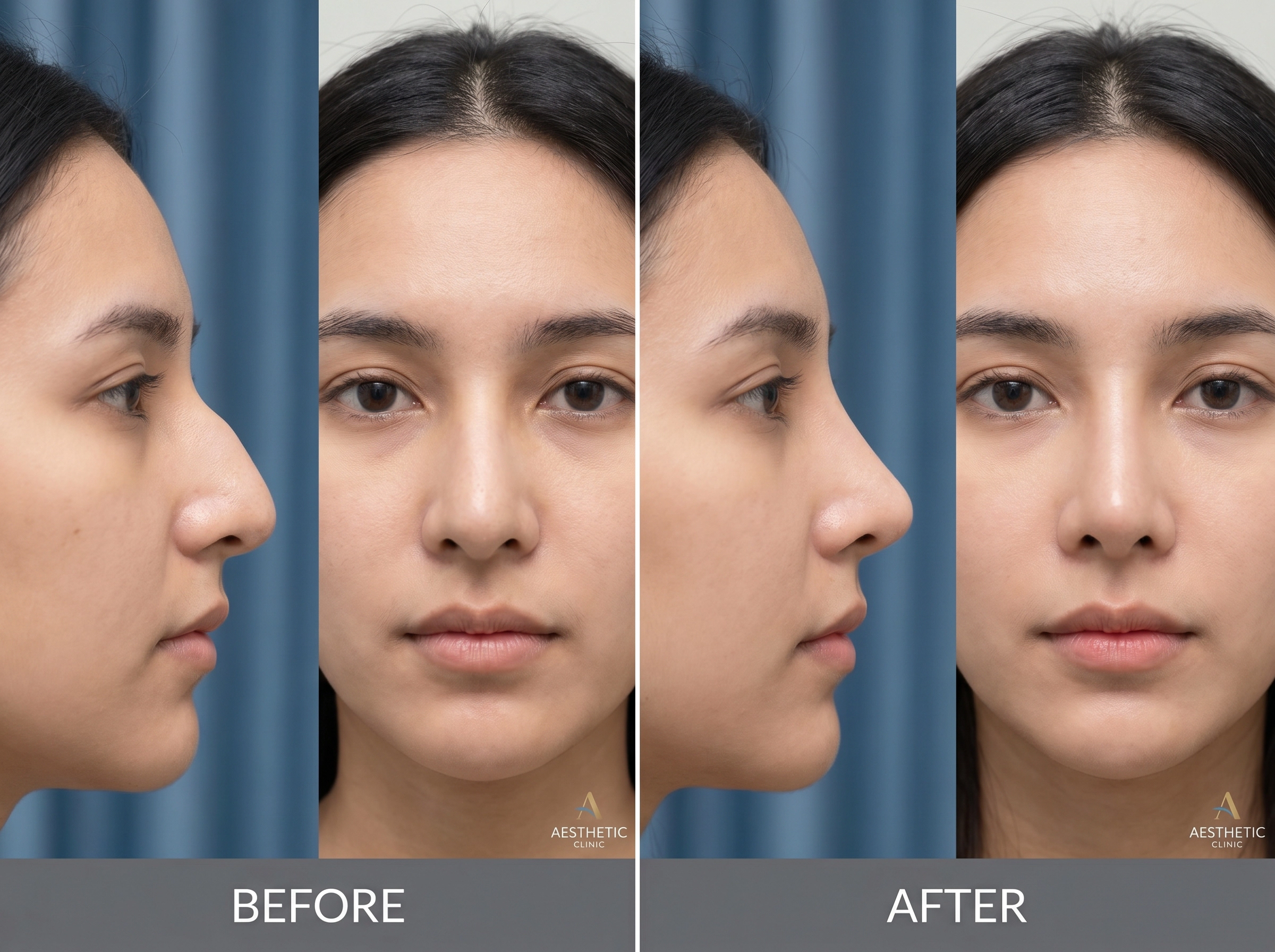
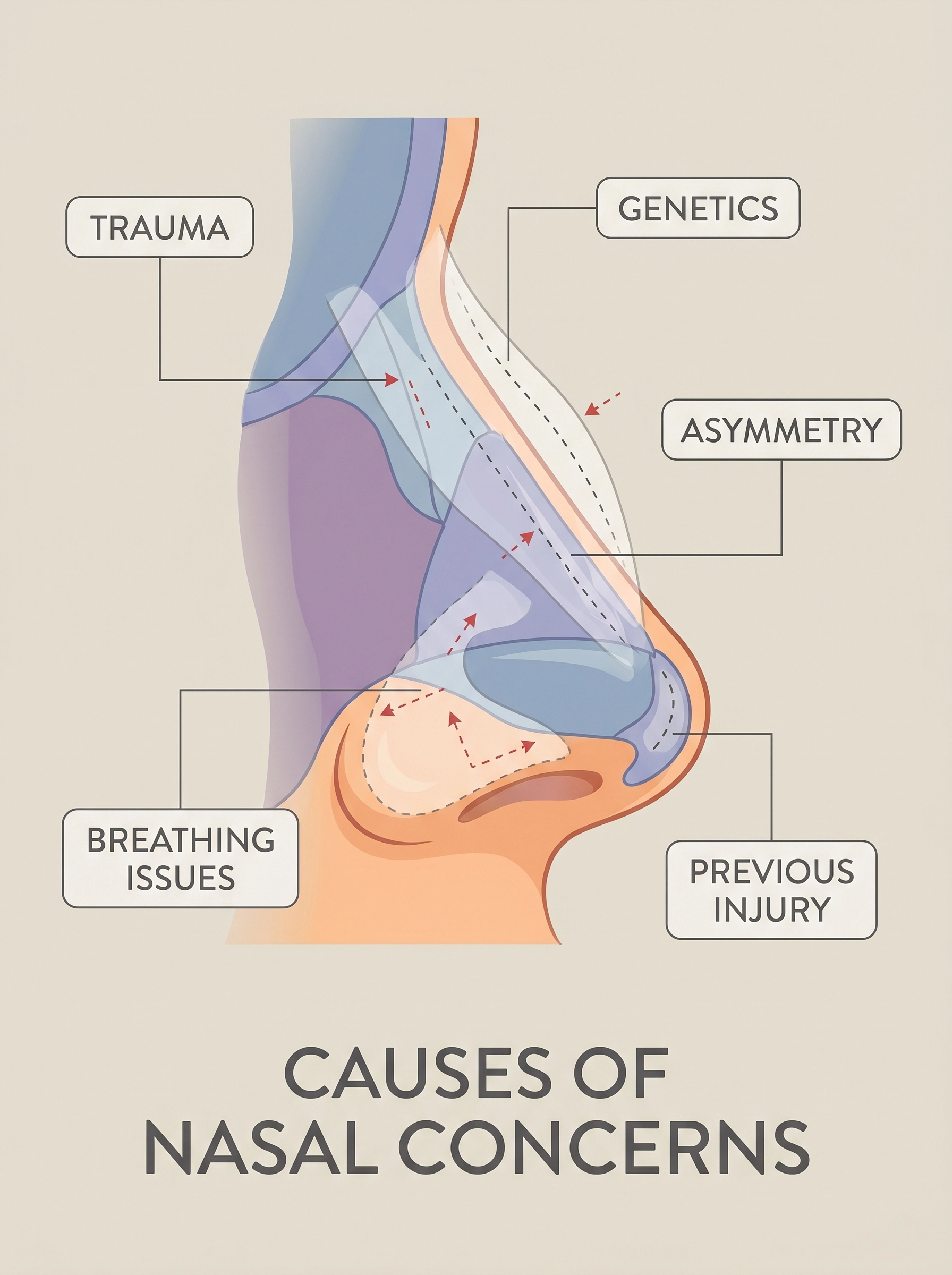
Common causes of nasal asymmetry and breathing concerns treated with rhinoplasty surgery

CAUSES FOR NASAL CONCERNS

  • Genetic nasal shape or asymmetry
  • Trauma or injury to the nose
  • Breathing issues from structural abnormalities
  • Previous nasal surgery requiring correction
  • Age-related changes affecting nasal shape
  • Facial imbalance involving the nose profile

SYMPTOMS OR SIGNS THAT MAY BENEFIT FROM SURGERY

  • Crooked or asymmetrical nose
  • Prominent nasal hump
  • Wide or poorly defined nasal tip
  • Difficulty breathing through the nose
  • Uneven nostrils
  • Dissatisfaction with nasal appearance or side profile
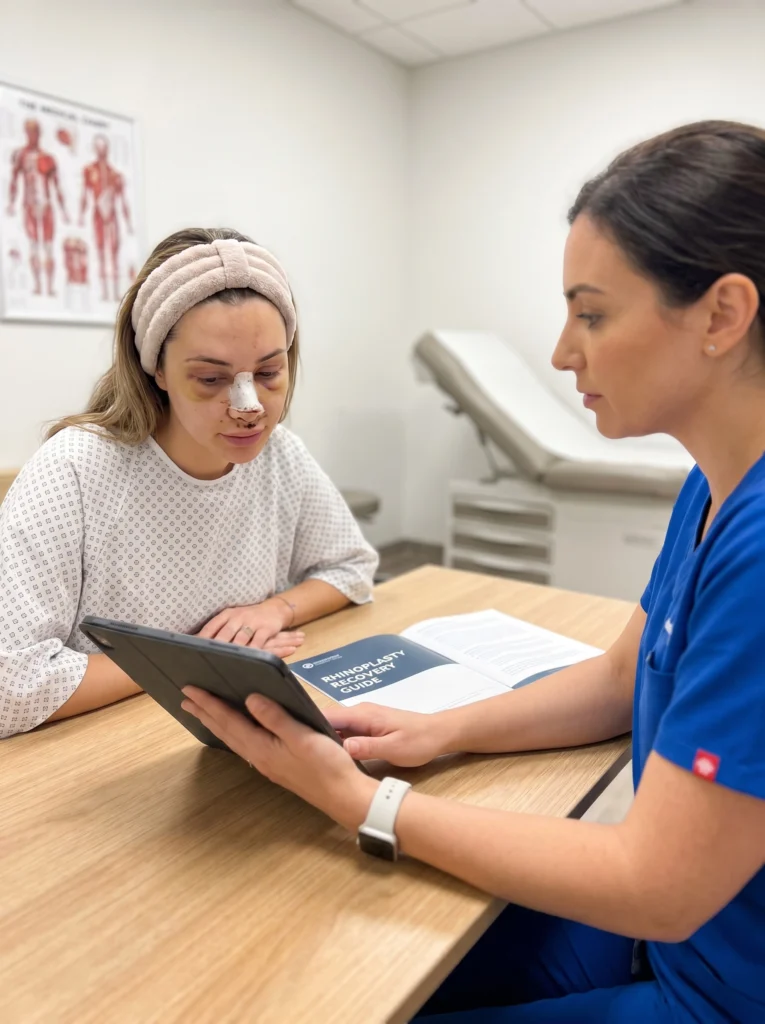
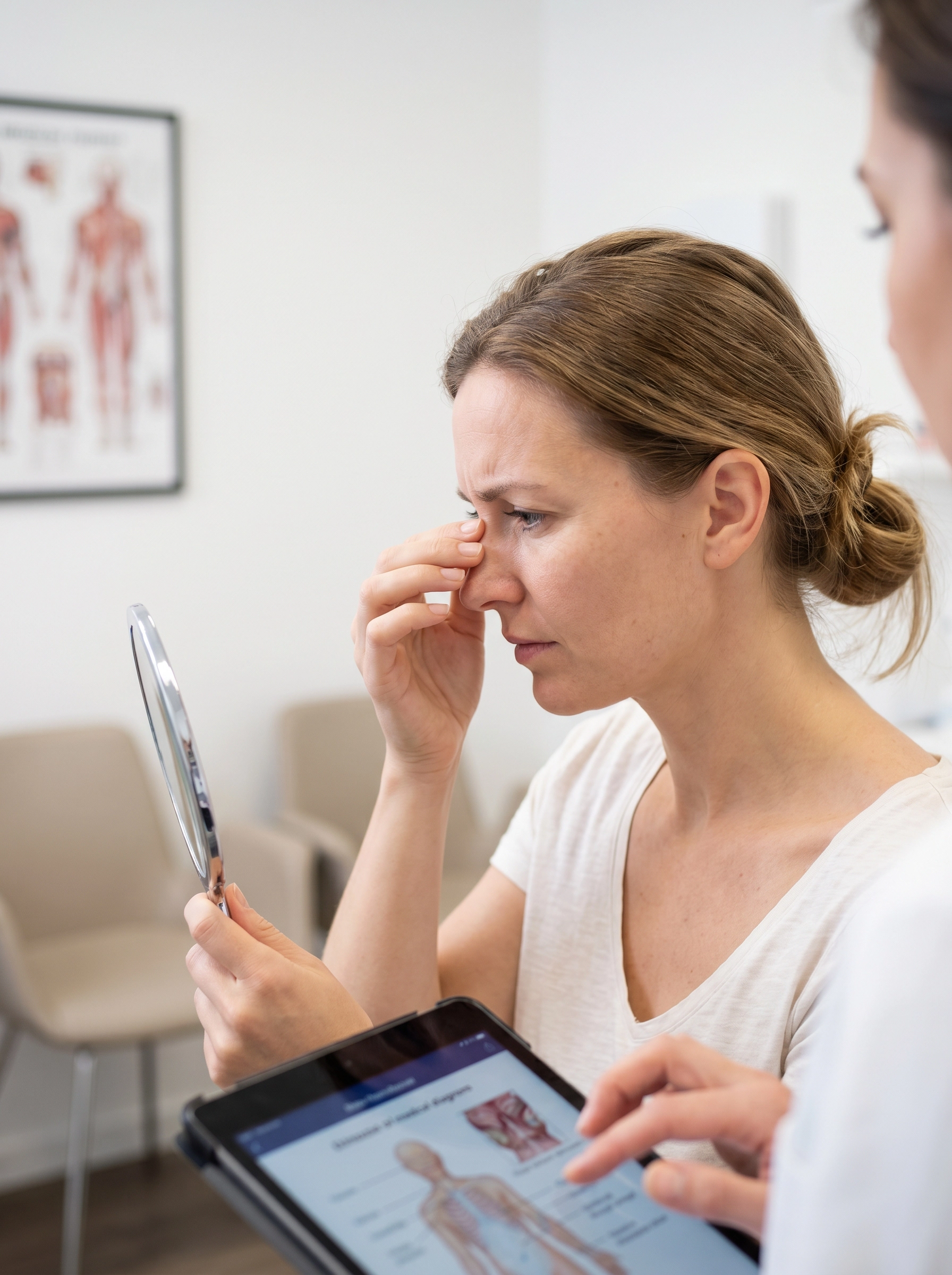
Patient examining nose shape and profile concerns before rhinoplasty surgery

Treatment Process

Rhinoplasty (Day Case) is typically performed under general anaesthesia and usually takes 2–3 hours. It includes:


Your nasal structure, breathing function, facial proportions, and treatment goals are carefully assessed.


General anaesthesia ensures a safe and comfortable procedure.


The surgeon reshapes the nasal bone, cartilage, or both to achieve the desired appearance and improve function where needed.


Incisions are closed carefully, and a nasal splint or dressing is applied to support healing.


Patients are monitored after surgery and are usually able to return home later the same day with detailed aftercare instructions.

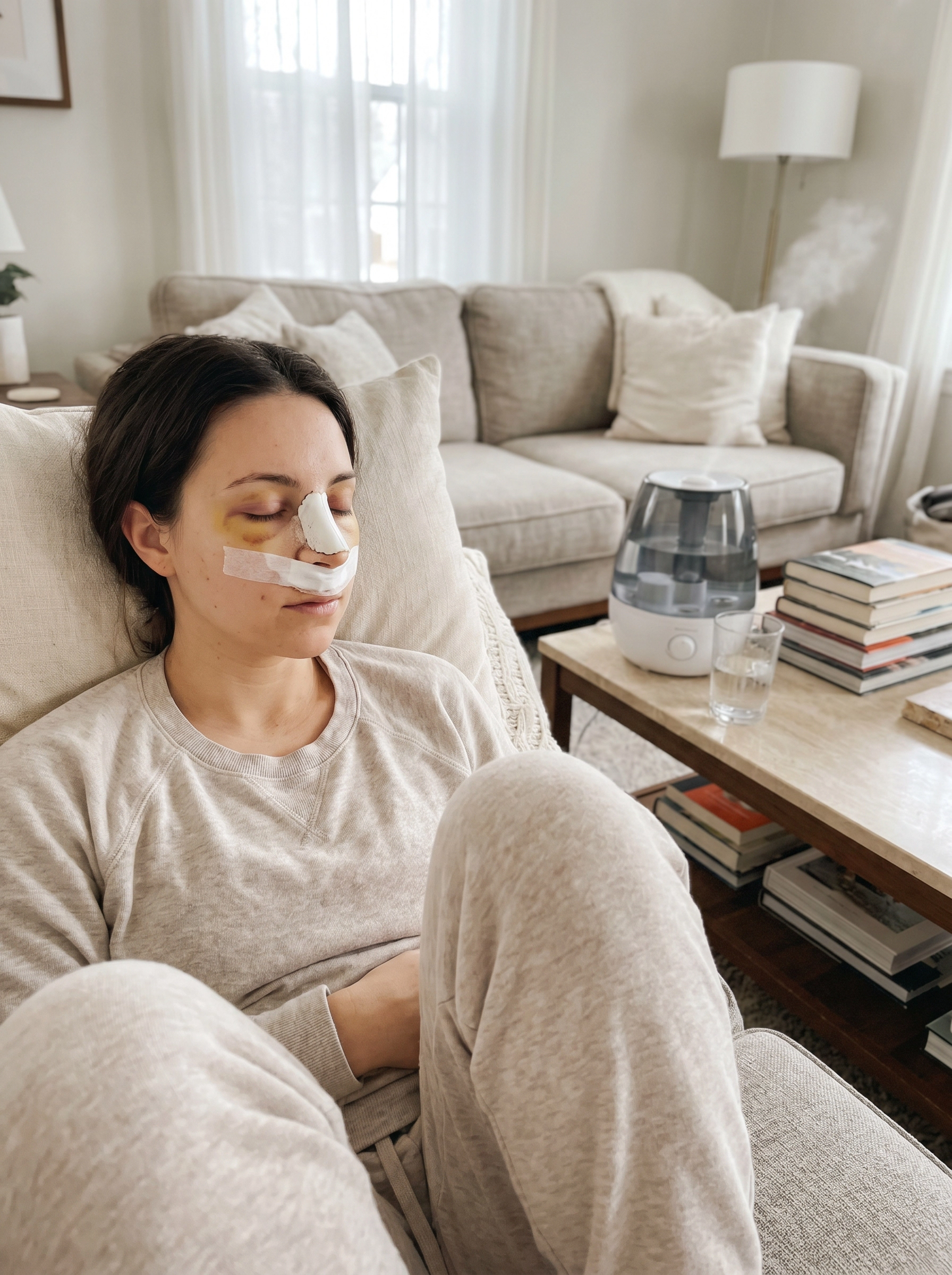
Patient recovering after rhinoplasty surgery while wearing a nasal splint

Recovery and Aftercare

  • Mild swelling and bruising around the nose and eyes are expected initially
  • Nasal splint is usually worn for approximately 1 week
  • Mild discomfort or congestion may occur during early healing
  • Avoid strenuous activity for several weeks
  • Sleep with the head elevated during recovery
  • Most patients return to light daily activities within 1–2 weeks

Potential Risks and Considerations

  • Swelling or bruising
  • Temporary nasal congestion
  • Infection (rare with proper care)
  • Minor asymmetry during healing
  • Changes in skin sensation temporarily
  • Need for revision surgery in uncommon cases
Temporary swelling and bruising during recovery after rhinoplasty surgery

Success Stories

More than 250 five-star reviews on Google
5/5

The Smooth Eye Laser treatment was fantastic! It completely rejuvenated my under-eye area, making me look well-rested and youthful. The procedure was quick, painless, and the results are simply amazing. Highly recommend it for anyone dealing with fine lines or sagging skin around the eyes.

38, London
5/5

I noticed a huge difference after the Smooth Eye Laser treatment. My crow’s feet and puffiness reduced significantly, and my eyes look brighter and more refreshed. The team at London Harley Street Clinics was incredibly professional and made the whole process seamless.

42, Birmingham
5/5

Smooth Eye Laser exceeded my expectations! I was tired of looking tired, and this treatment worked wonders for my under-eye bags and wrinkles. The recovery was minimal, and the results are natural yet noticeable. I couldn’t be happier!

45, Manchester

have a question?

Quick answers to questions you may have

Most patients return to light activities within 1–2 weeks, although swelling continues improving over several months.


Yes, rhinoplasty can improve breathing when structural issues such as a deviated septum are corrected.


Most incisions are hidden inside the nose or placed discreetly, resulting in minimal visible scarring.


Most patients experience mild to moderate discomfort rather than severe pain during recovery.


Our surgeons combine functional and aesthetic expertise to achieve natural-looking results that enhance facial harmony while prioritising patient safety and personalised care.