SKIN MOLE REMOVAL (1–3 MOLES)

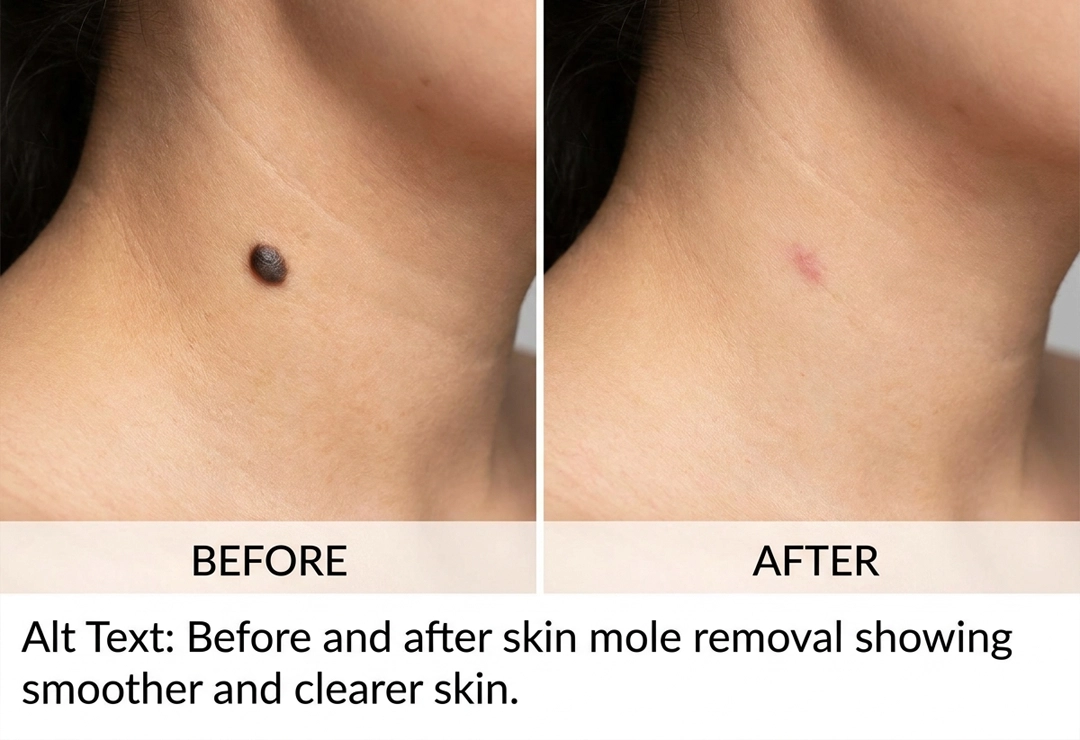
Skin mole removal is a minor surgical or non-surgical procedure designed to safely remove unwanted, raised, suspicious, or cosmetically concerning skin moles. The treatment can improve comfort, appearance, and skin confidence while also allowing abnormal-looking moles to be assessed when necessary. Depending on the size, type, and location of the mole, removal may be performed using surgical excision, shave removal, laser treatment, or cautery techniques. At London Harley Street Clinics, our specialists provide safe and precise mole removal treatments with a focus on minimal scarring and natural-looking skin healing.
WHO IS SKIN MOLE REMOVAL FOR?

Skin mole removal may be suitable for individuals who: Have unwanted or cosmetically bothersome moles, Experience irritation from clothing, shaving, or jewellery, Have raised or uneven skin moles, Notice changes in a mole’s appearance, Want smoother and clearer skin, Have up to 1–3 moles requiring treatment, Want professional assessment and removal by trained specialists

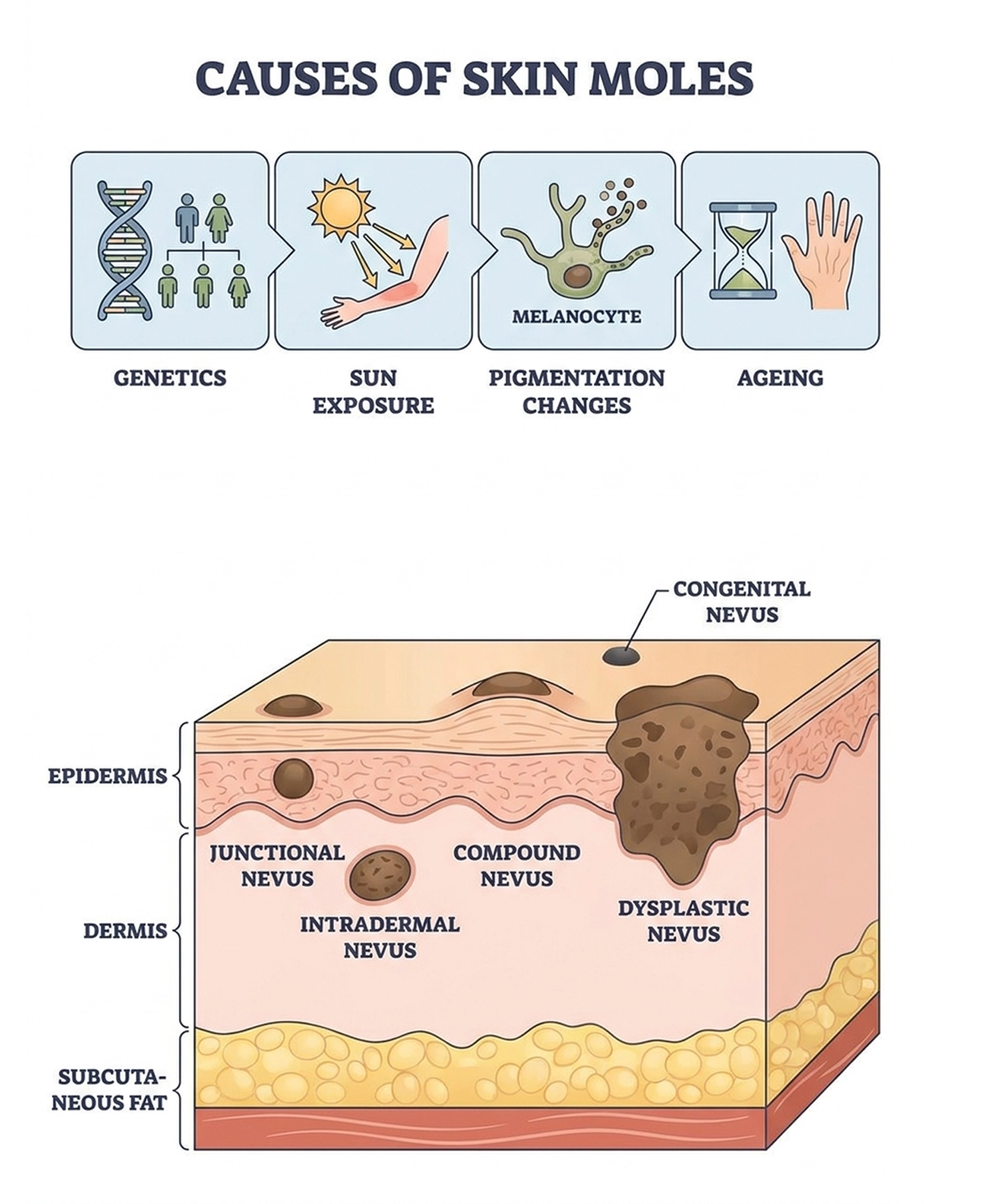
Common causes of skin moles including genetics and sun exposure

CAUSES OF SKIN MOLES

  • Genetics and hereditary factors
  • Sun exposure and UV damage
  • Hormonal changes
  • Natural skin pigmentation changes
  • Age-related skin changes

SYMPTOMS OR SIGNS THAT MAY BENEFIT FROM SURGERY

  • Raised or protruding moles
  • Irritated or itchy moles
  • Moles catching on clothing or shaving
  • Changes in colour, size, or shape
  • Uneven skin texture caused by moles
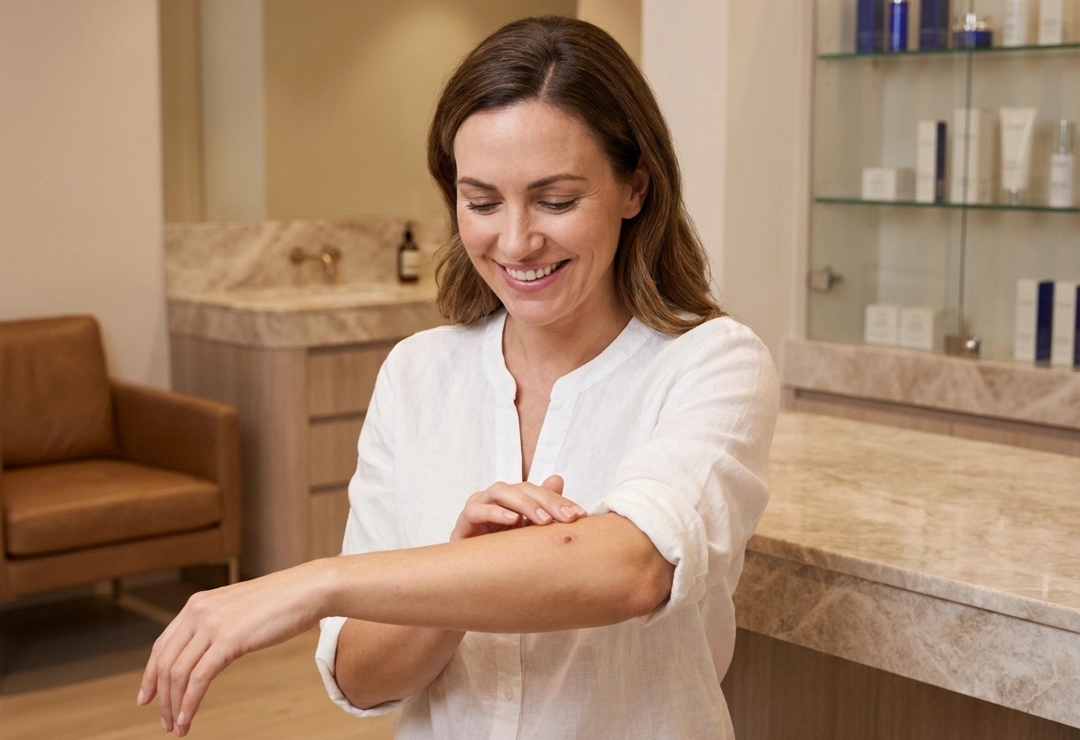
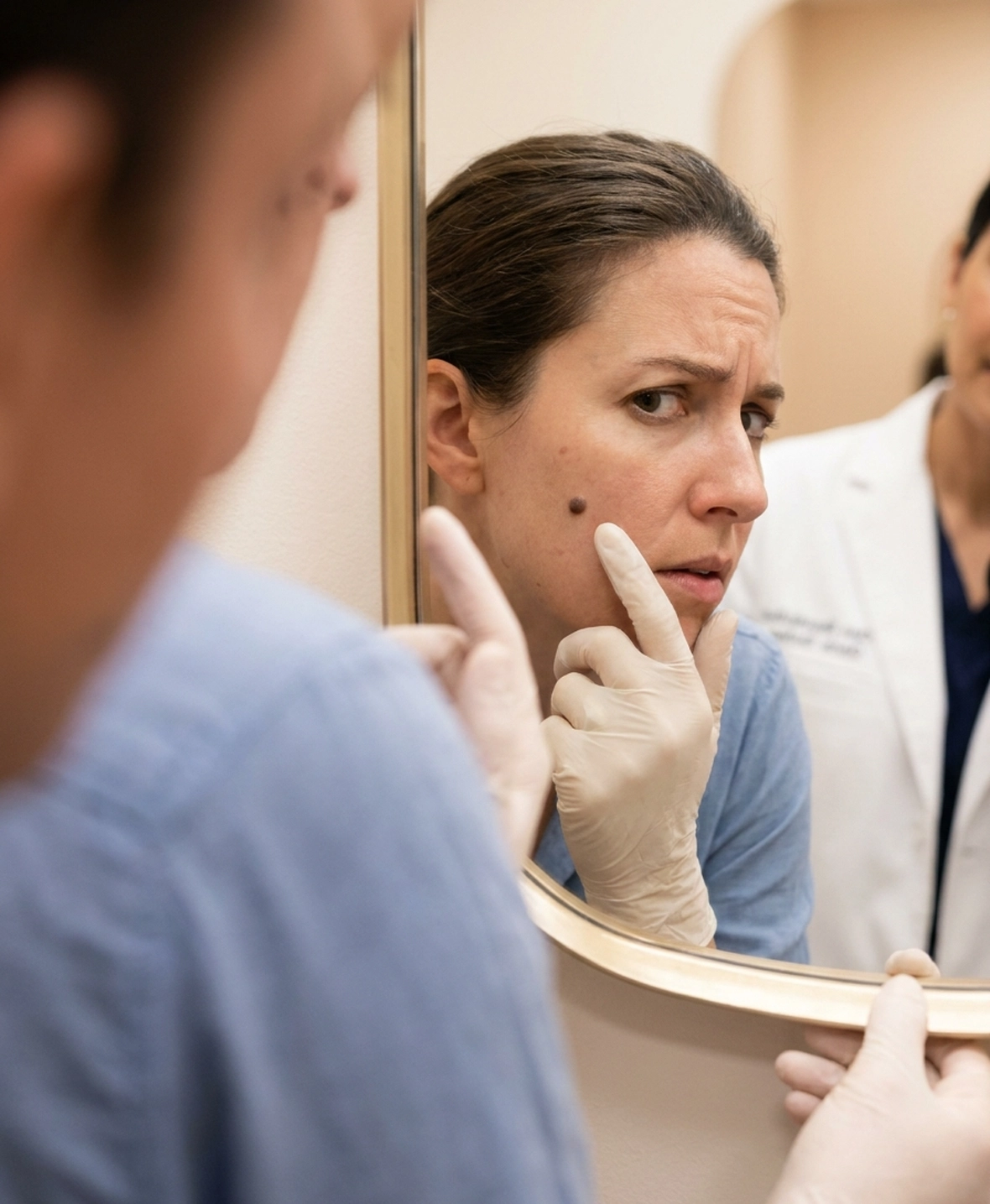
Patient examining a raised skin mole before mole removal treatment

Treatment Process

Skin mole removal is typically performed under local anaesthesia and usually takes 15–45 minutes depending on the number and type of moles. It includes:


The mole or moles are carefully examined to assess suitability for removal and determine the most appropriate technique.


Local anaesthesia is applied to numb the treatment area and ensure comfort.

The mole is removed using the selected technique such as surgical excision, shave removal, cautery, or laser treatment depending on the mole type and location.


The area may be stitched if necessary, cleaned carefully, and covered with a dressing to support healing.


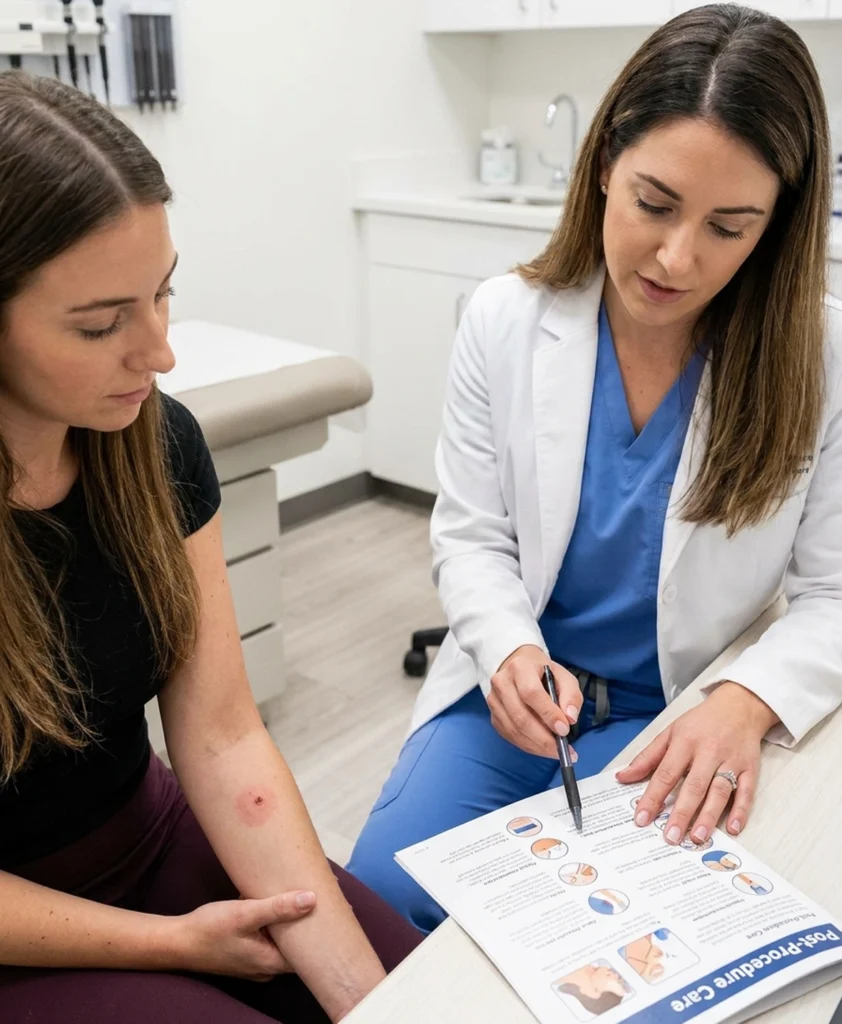
Patient caring for healing skin after mole removal treatment

Recovery and Aftercare

  • Mild redness or tenderness is expected temporarily
  • Keep the treated area clean and dry initially
  • Avoid picking or scratching healing skin
  • Follow dressing and wound care instructions carefully
  • Small scabs may form during healing

Potential Risks and Considerations

  • Mild redness or swelling
  • Temporary scabbing or sensitivity
  • Infection (rare with proper aftercare)
  • Minor scarring or pigmentation changes
  • Mole recurrence in some cases
Temporary redness and scabbing during recovery after skin mole removal treatment

Success Stories

More than 250 five-star reviews on Google
5/5

The Smooth Eye Laser treatment was fantastic! It completely rejuvenated my under-eye area, making me look well-rested and youthful. The procedure was quick, painless, and the results are simply amazing. Highly recommend it for anyone dealing with fine lines or sagging skin around the eyes.

38, London
5/5

I noticed a huge difference after the Smooth Eye Laser treatment. My crow’s feet and puffiness reduced significantly, and my eyes look brighter and more refreshed. The team at London Harley Street Clinics was incredibly professional and made the whole process seamless.

42, Birmingham
5/5

Smooth Eye Laser exceeded my expectations! I was tired of looking tired, and this treatment worked wonders for my under-eye bags and wrinkles. The recovery was minimal, and the results are natural yet noticeable. I couldn’t be happier!

45, Manchester

have a question?

Quick answers to questions you may have

No. Local anaesthesia is used to ensure the procedure is comfortable.


Some minor scarring is possible, although techniques are chosen carefully to minimise visible marks.

Yes, removed tissue can be sent for laboratory analysis if medically indicated.

Most areas heal within several days to a few weeks depending on the treatment method and skin type.

Our specialists combine precise removal techniques with personalised skin assessment to achieve safe treatment, minimal scarring, and professional aftercare support.