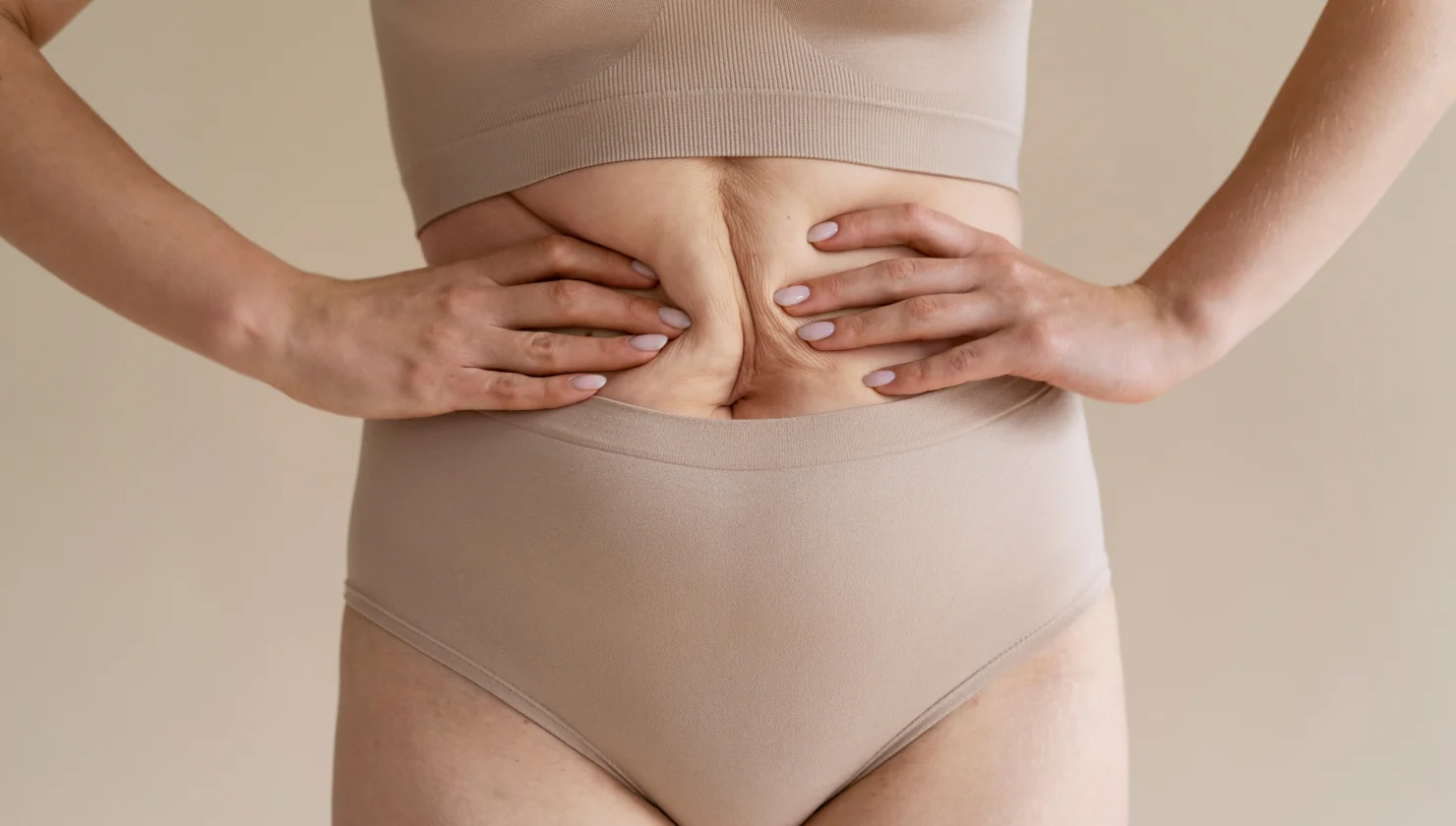
Recognise early changes, understand assessment and management options, and know when swelling needs urgent medical help.

Early lymphoedema management starts with recognising a change and getting the cause assessed. Persistent or recurring swelling, heaviness or tighter clothing may need a GP or specialist review. If lymphoedema is confirmed, a tailored plan can help control swelling and protect your skin. Not every swollen limb is lymphoedema. [1] [2]
Lymphoedema is the usual UK spelling; lymphedema refers to the same condition. This guide is general information, not a diagnosis or a personalised treatment plan.
What are the early signs of lymphoedema?
Lymphoedema develops when the lymphatic system cannot drain fluid effectively. It commonly affects arms or legs, although other areas can be involved. It may be linked to how the lymphatic system developed, or to damage from illness, injury or cancer treatment. [1]
Early changes can be subtle. Look out for:
- A limb or body area feeling heavier, fuller, tighter or achier than usual.
- Rings, watches, shoes or clothing fitting differently.
- Puffiness that is more noticeable later in the day.
- A change in shape, movement or comfort.
After treatment involving lymph nodes, tell your cancer team about changes in the hand, arm, breast or chest area. Swelling after treatment is not automatically lymphoedema, but persistent or worrying changes deserve attention. [2]
Why an early assessment matters
Swelling that settles overnight can still be worth discussing. Waiting for it to become permanent is not a reliable way to decide whether help is needed. A clinical assessment can establish a baseline, consider other causes and guide the right referral. Early diagnosis and treatment may help prevent worsening. [3]
When does swelling need urgent medical help?
Do not assume a new or rapidly changing swollen limb is simply lymphoedema. A blood clot or skin infection may need prompt treatment.
LHSC’s private urgent-care service is not an ambulance or A&E service.
What does a lymphoedema assessment involve?
A clinician will ask about the onset and pattern of swelling, your medical history and previous treatment. Examination and limb measurements often provide useful information; further tests are not needed in every case. Imaging or other measurements may be considered when the diagnosis is uncertain or another cause needs investigation. [3]
A specialist assessment can also consider skin condition, movement, daily activities and whether compression is suitable. Bring relevant treatment letters and any garments you already use. [6]
If you have had breast cancer treatment, NICE recommends assessment for other treatable factors before a management programme begins, and referral to a specialist lymphoedema service when lymphoedema develops. These recommendations apply specifically to breast-cancer-related care. [7]
Ask who will coordinate follow-up. A useful appointment should leave you clear about the working diagnosis, whether referral is needed and how to get help if symptoms change.
How is early lymphoedema managed?
Treatment is selected for the cause, affected area and individual circumstances. The NHS describes decongestive lymphatic therapy (DLT), combining compression, skin care, exercise and specialist massage techniques. Some people need intensive treatment followed by longer-term maintenance; the plan is not identical for everyone. [8]
| Approach | What to discuss with your care team |
|---|---|
| Compression | Suitable garment or bandaging, fit and wear instructions. |
| Skin care | A daily routine and how to recognise possible infection. |
| Movement | Activities suited to your ability and treatment history. |
| Lymphatic drainage | Whether specialist massage or taught self-drainage is appropriate. |
| Follow-up | How swelling, comfort and the treatment plan will be reviewed. |
Compression should be assessed and fitted
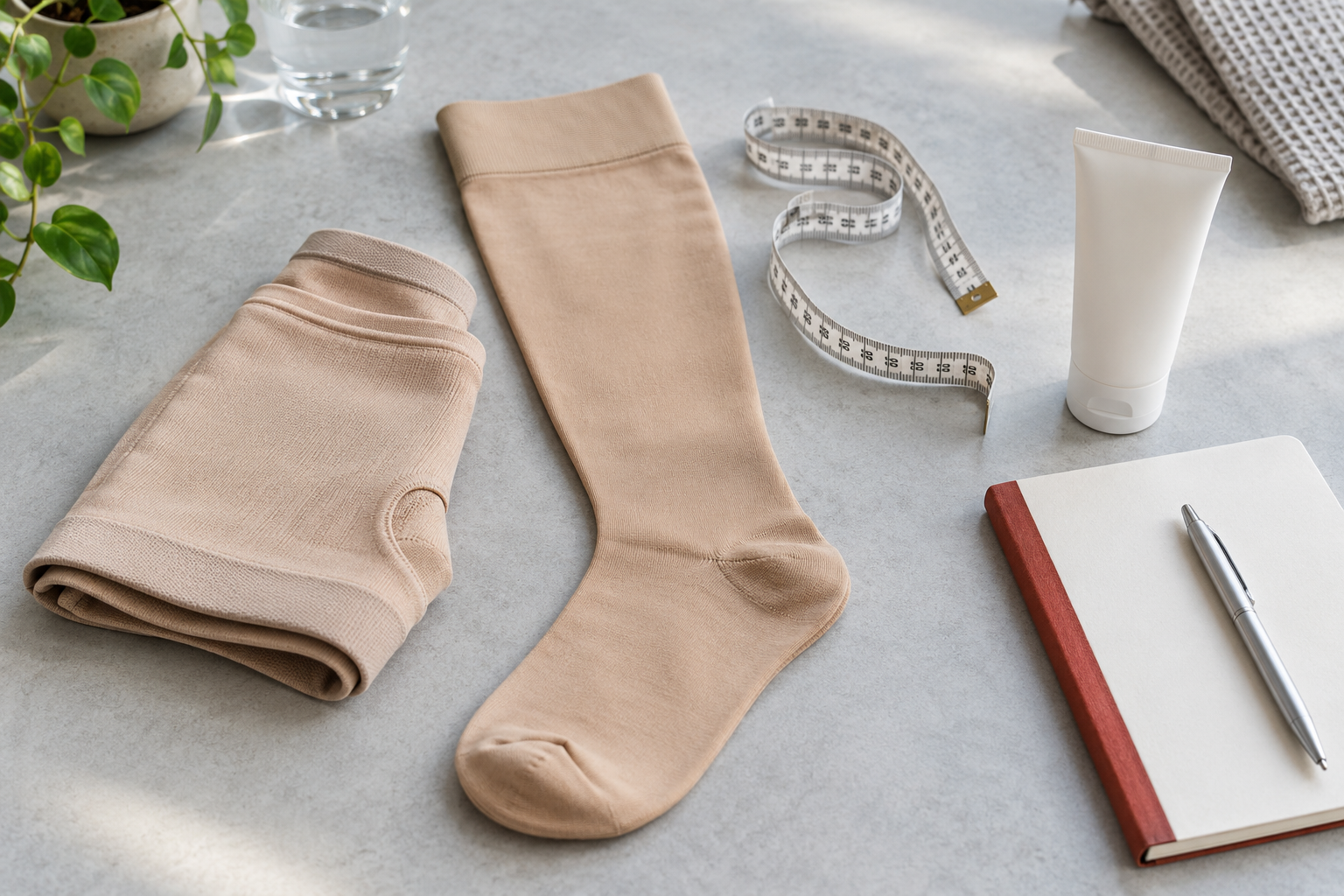
Garments, wraps and bandages apply pressure to help control swelling. The right type and pressure are chosen for you; stronger is not automatically better. A specialist should measure and fit the garment and explain when to wear it. Pain, numbness, tingling or colour changes are reasons to remove it and contact your specialist promptly. [9]
Do not start a compression regimen for unexplained swelling without assessment. Compression may be unsuitable for some people, including those with certain arterial circulation problems. [8]
Skin care and movement remain important
Keep skin clean, dry and moisturised, and protect it from cuts, sunburn and insect bites. Ask your team about skin or nail problems. These measures support skin health; they cannot eliminate the risk of infection. [10]
Movement is part of management, not something everyone with lymphoedema must avoid. NICE advises people with breast-cancer-related lymphoedema that physical activity does not worsen the condition and may improve quality of life. Follow an appropriate exercise plan rather than a generic intensive routine. [7]
Manual lymphatic drainage is not an ordinary deep massage
Manual lymphatic drainage (MLD) uses specialist techniques to help fluid move towards functioning drainage pathways. Simple lymphatic drainage is a technique a specialist may teach for home use. Ask for practical instruction rather than copying a massage video. [11]
LHSC lists a manual lymphatic drainage service. Ask the clinic whether your needs are appropriate for that service and whether specialist assessment or referral is required. This guide does not promise that massage alone treats your swelling.
Is surgery the first step?
Surgery is an option for selected patients at specialist centres, not a routine first step for anyone noticing swelling. Specialist lymphatic surgery and liposuction for lymphoedema have different aims from cosmetic body contouring. Suitability and ongoing care need individual discussion. [8] [11]
What early action can look like in everyday life
Hypothetical examples, not patient stories or diagnoses:
A ring becomes tight after cancer treatment
Someone notices their ring and sleeve fit differently after treatment involving lymph nodes. Instead of assuming the change is expected, they record when it started and contact their treatment team. They ask whether assessment and a specialist referral are needed.
An ankle keeps swelling by evening
Someone has recurring ankle swelling without knowing its cause. They arrange a GP assessment before buying a strong compression stocking. If swelling becomes sudden or painful, or the skin becomes hot and swollen, they use the urgent-help guidance above rather than waiting for the routine appointment.
The useful principle is to establish the cause before choosing a treatment. Neither scenario proves lymphoedema.
Your appointment-preparation checklist
- Note the timing: when the change began, whether it comes and goes, and what has changed.
- Describe the impact: discomfort, movement, clothing fit and daily activities.
- Bring your history: relevant operations, cancer treatment and previous swelling or infections.
- Bring practical information: a medicines list, relevant letters and existing compression garments.
- Ask about the plan: the likely cause, referral, treatment options and who will coordinate care.
- Ask about safety: which changes need urgent help and who to contact between appointments.
Keep any symptom notes or photographs private and share them through the clinical channel your care team recommends. Do not post medical details publicly.
Frequently asked questions
Can early lymphoedema be cured?
Current treatments aim to manage swelling and symptoms, not provide a guaranteed cure. Long-term care may still be needed when swelling improves. Discuss realistic goals with your specialist. [11]
Can swelling that comes and goes still need assessment?
Yes. Early swelling may vary through the day or improve overnight. Tell your GP or treatment team about recurring changes, particularly after treatment involving lymph nodes. A changing pattern does not establish the diagnosis by itself. [1] [2]
Should I buy compression stockings before seeing someone?
Have unexplained swelling assessed first. Compression needs the right type, fit and instructions, and is not suitable for everyone. If you already have a prescribed plan, follow it and ask your team about new symptoms or problems with the garment. [8] [9]
Can I do lymphatic drainage massage myself?
A specialist may teach simple lymphatic drainage as part of your plan. Ask whether it is appropriate and request instruction before trying it. [11]
Is exercise safe if I have lymphoedema?
Exercise is part of management. Ask your team for advice suited to your affected area and ability. For breast-cancer-related lymphoedema, NICE advises that physical activity does not worsen the condition and may help quality of life. [7]
Does swelling after surgery always mean lymphoedema?
No. Swelling can have several causes. After cancer surgery or radiotherapy, swelling may settle, but a change that persists or worries you should be discussed with your healthcare team. Sudden painful swelling needs urgent assessment. [2] [4]
What if the swollen area becomes hot or painful?
Seek an urgent GP appointment or NHS 111 assessment. Painful, hot, swollen skin may indicate cellulitis. If swelling is accompanied by chest pain or breathlessness, call 999 rather than waiting for an appointment. [4] [5]
Who should I contact first?
For new or recurring unexplained swelling, start with your GP or the healthcare team already managing your condition. They can assess the cause and arrange the appropriate referral. For an LHSC enquiry, ask the clinic to confirm the suitable clinician, service and location before booking. [3]
Book an MLD appointment at London Harley Street Clinics
London Harley Street Clinics provides manual lymphatic drainage (MLD). This specialist massage technique may form part of a lymphoedema management plan where clinically appropriate. You can book an appointment to discuss whether the service is suitable for your needs.
New or unexplained swelling should be assessed before treatment is chosen. An MLD appointment does not replace a specialist lymphoedema referral or an existing care plan when these are needed.
Arrange your MLD appointment
Use the booking page or contact the team to discuss suitability and availability. For an enquiry in New Malden in Kingston upon Thames, the team will confirm the appropriate clinician and location.
Message the clinic on WhatsApp
Appointments depend on clinical suitability and availability. Enquiry channels are not emergency services. Do not wait for a reply if you need urgent medical help.
Related clinic information
- The clinic’s manual lymphatic drainage service
- What the New Malden urgent-care clinic covers
- The clinic’s cosmetic liposuction guide (a different context from specialist lymphoedema surgery).
Sources and further reading
Sources checked on 13 October 2026. Some NHS lymphoedema pages show a last review date of March 2023; relevant advice was cross-checked with NICE’s 2025 recommendations and UCLH’s June 2026 information. NICE’s breast cancer recommendations do not apply to every cause of lymphoedema.
- NHS: lymphoedema overview.
- UCLH: reducing the risk of lymphoedema in the hand, arm and chest. Updated 4 June 2026.
- NHS: diagnosing lymphoedema. Last reviewed 29 March 2023.
- NHS: deep vein thrombosis (DVT). Last reviewed 30 April 2026.
- NHS: cellulitis symptoms and urgent help.
- Guy’s and St Thomas’: lymphoedema appointments. Updated November 2024.
- NICE NG101: early and locally advanced breast cancer recommendations. Lymphoedema recommendations amended in 2025.
- NHS: lymphoedema treatment. Last reviewed 29 March 2023.
- Cancer Research UK: compression treatment for lymphoedema.
- NHS: reducing the risk of lymphoedema.
- Cancer Research UK: types of lymphoedema treatment.
This article is educational information. It does not replace an examination, specialist advice or your existing care plan. No individual outcome, clinic treatment availability or treatment price is guaranteed.